
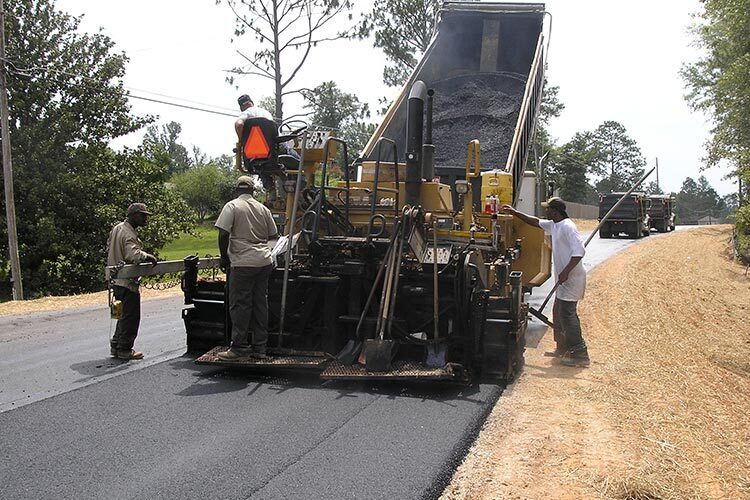
Founded in 1979, Walters Construction Inc. began with just a few trucks hauling material. Today, the company is led by Scottie Walters, who grew up in the business and now oversees its continued growth. Over more than four decades, the company has grown into a diversified construction operation performing dirt work, asphalt paving, milling, and utility services across multiple counties.
Despite that growth, the company still operates with the mindset of a family business. Walters emphasizes loyalty, long-term relationships, and taking care of employees. That culture shapes how decisions are made, especially when it comes to safety, accountability, and protecting both drivers and the business.
Customer Profile

Company: Walters Construction Inc. – www.waltersconstructionco.com
Industry: Heavy civil construction, asphalt paving, and site development
Business Type: Multi-generation, family-owned contractor
Fleet Size: Roughly 75 on-road vehicles, including a mix of heavy-duty and light-duty trucks, along with a large off-road equipment fleet
Owner: Scottie Walters, President at Walters Construction Inc.
The Challenge
Running a mixed construction fleet brings unique safety risks. Drivers operate on highways, in active work zones, and around heavy equipment, often under time pressure and changing conditions. Most incidents, as Walters describes them, do not involve reckless behavior. They involve good, experienced drivers making brief mistakes in demanding environments.
As the company grew, several challenges became clear:
- Limited clarity after incidents. Without objective data, leadership was often left sorting through conflicting accounts. As Walters put it, without reliable information, “you’re left sorting through different stories. We needed facts, not guesses, especially when something serious happened.”
- Insurance and liability pressure. Claims required documentation and defensible data. The company needed to support insurance conversations with facts while protecting its reputation and its people.
- Maintaining culture while increasing accountability. Walters was clear that safety could not become constant surveillance. The goal was to reinforce responsibility and coaching, not create a punitive environment.
- Elevating internal safety leadership. After several serious industry-related events reinforced the importance of proactive safety, the company created a dedicated safety lead role. That role needed better tools to review incidents, identify patterns, and reinforce expectations across the fleet without adding excessive administrative work.
- Operational complexity. With dozens of trucks and a large equipment fleet operating across diverse jobs, leadership needed better visibility into how vehicles were being used day to day.
Traditional methods were no longer enough. The company needed a data-driven foundation that aligned with its culture and provided clarity before and after incidents.
The Solution
Walters Construction Inc. partnered with Advanced Fleet Solutions (AFS) to implement Geotab telematics across its fleet, integrated with video.
For Walters, the value was not in simply tracking trucks. It was in understanding what actually happened during events and identifying risk earlier. As he explained, the goal “was never to watch drivers. It was about accountability and safety, and having the right information to address issues the right way.”
Through Geotab and its Safety Center, the company gained:
- Real-time visibility into behaviors such as harsh braking, speeding, and sudden maneuvers
- Video-supported context to better understand incidents and near misses
- Predictive safety insights to identify higher-risk patterns before they lead to serious events
- The ability to compare drivers across the fleet to prioritize coaching and understand relative risk
- Clear, time-stamped documentation to support incident review and insurance discussions
AFS worked closely with the team to ensure the system aligned with company expectations and supported the newly established safety lead role. Alerts and reporting were configured to highlight meaningful patterns rather than isolated mistakes, allowing leadership to coach proactively without overwhelming staff.
The Results
Fewer Incidents and Safer Driving
By combining Geotab data with video insight, the company has been able to address risky patterns earlier and reinforce safer driving habits. Leadership has seen improved driver awareness and more constructive conversations following events.
Fewer serious incidents mean safer outcomes for employees, less vehicle downtime, and reduced repair disruptions. Keeping trucks on the road instead of in the shop directly supports project timelines and operational stability. As Walters noted, “AFS and the Geotab system help us address issues before they turn into something bigger, and that protects our drivers and our equipment.”
Lower Insurance Premiums and Risk Exposure
Insurance impact has been a meaningful part of the return. The company qualified for insurance considerations tied to implementing a telematics solution, and improved documentation has strengthened its position during claims discussions.
According to leadership, the combination of documented safety improvements and telematics participation has contributed to lower insurance premiums over time while providing greater confidence when working with insurance partners.
Improved Efficiency and Productivity
Beyond safety and insurance, telematics has delivered operational value.
Using Geotab data, leadership can monitor vehicle activity, idling, and extended stops. This visibility has helped reinforce expectations around productive vehicle use and reduce unnecessary downtime, such as trucks sitting idle for extended periods.
Rather than relying on assumptions, managers can coach based on data. That has supported better fuel use, reduced wear and tear, and more consistent jobsite performance.
Stronger Accountability and Clarity
When incidents occur, leadership no longer relies solely on memory or secondhand accounts. Objective, time-stamped data allows the team to review events fairly and consistently.
This clarity protects both the company and its drivers. It also reinforces a culture where accountability is based on facts, not speculation.
Why Advanced Fleet Solutions
For Walters Construction Inc., the decision to work with AFS was rooted in trust and expertise.
AFS was connected through Transafe, a sister company that provides drug screening and safety-related services. That relationship mattered. Leadership valued working with partners who understand construction operations, compliance expectations, and the realities of managing driver risk.
AFS brought practical experience in fleet safety and compliance, helping the company apply Geotab in a way that fit its culture and operational needs. Rather than a one-size-fits-all deployment, AFS worked closely with the team to ensure the technology supported both safety leadership and day-to-day management.
Customer service has been a clear differentiator. As Walters noted, when the company needs information after an incident, “they’re always there to help us get what we need.” That responsiveness stands in contrast to larger, more impersonal providers.
For Walters Construction Inc., having a high-touch partner who understands their business and provides direct support has been just as important as the technology itself.